

Designing infrastructure — whether highways, railways, or airport runways — demands precision, speed, and tight collaboration between surveyors, civil engineers, and GIS professionals. With multiple teams collecting and editing project information, maintaining data integrity and tracking changes is critical to prevent costly errors.设计基础设施——无论是高速公路、铁路还是机场跑道——都需要测量员、土木工程师和地理信息系统专业人员之间的精确性、速度和紧密协作。由于多个团队在收集和编辑项目信息,保持数据完整性和跟踪变更对于防止代价高昂的错误至关重要。
ArcGIS for AutoCAD, combined with multiuser editing capabilities in ArcGIS Enterprise, empowers civil engineering teams to work concurrently on designs in Autodesk Civil 3D without the risk of overwriting each other’s work or losing track of design decisions.适用于AutoCAD的ArcGIS结合ArcGIS Enterprise中的多用户编辑功能,使土木工程团队能够在Autodesk Civil 3D中同时进行设计工作,而不必担心覆盖彼此的工作或无法追踪设计决策。
This article explores how civil engineers and GIS professionals can improve collaboration between Civil 3D and ArcGIS using branch versioning, illustrated through a proposed airport runway extension project.本文探讨了土木工程师和GIS专业人员如何利用分支版本控制改善Civil 3D与ArcGIS之间的协作,并通过一个拟议的机场跑道扩建项目进行了说明。
Laying the groundwork 奠定基础
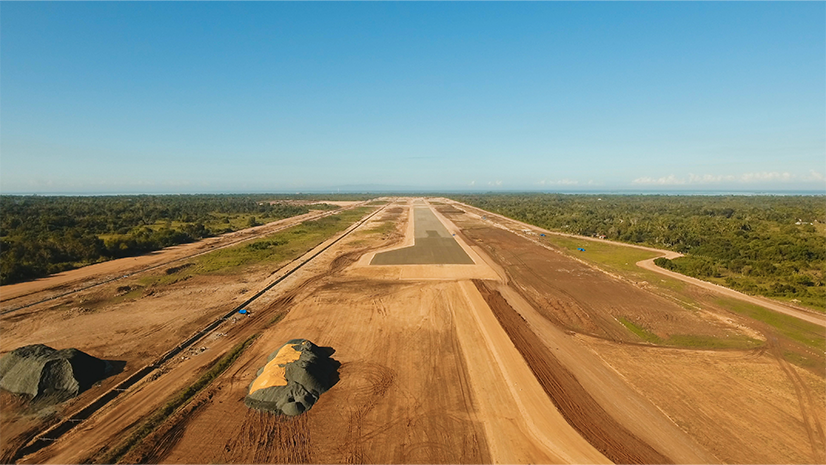
Let’s explore a project scenario for a proposed airport runway extension. This project, like many infrastructure projects, involves multiple teams working in parallel — surveyors capturing existing ground conditions, civil engineers developing design options, and the GIS team ensuring data governance and quality.让我们来探讨一个拟议中的机场跑道扩建项目场景。与许多基础设施项目一样,该项目涉及多个团队并行工作——测量员负责采集现有地面状况,土木工程师负责制定设计方案,而地理信息系统(GIS)团队则负责确保数据管理和质量。
The project starts with gathering existing conditions. Historical topographic survey points previously collected by a surveying team allow civil engineers to generate a TIN surface of the existing ground in Civil 3D. However, with data arriving from multiple surveyors in the field, the risk of civil designers working from potentially incomplete or outdated information grows.该项目从收集现有条件开始。测量团队此前收集的历史地形测量点使土木工程师能够在Civil 3D中生成现有地面的不规则三角网(TIN)表面。然而,由于数据来自现场的多名测量员,土木设计师使用可能不完整或过时信息开展工作的风险会增加。
Without a way to accurately track and version changes as they happen, merging updates to authoritative project information can be risky, leading to costly rework and delays.如果没有办法在变更发生时准确跟踪和版本化这些变更,那么合并对权威项目信息的更新可能会有风险,从而导致代价高昂的返工和延误。
Collaborating on project designs using GIS使用GIS协作进行项目设计
The project team is using ArcGIS as the GIS system of record for project information. They’re also using ArcGIS for AutoCAD to keep CAD and GIS data between Civil 3D and ArcGIS in sync.项目团队正使用ArcGIS作为项目信息的地理信息系统记录系统。他们还利用ArcGIS for AutoCAD来保持Civil 3D和ArcGIS之间的CAD与GIS数据同步。
With survey points stored in ArcGIS Enterprise, a civil engineer uses ArcGIS for AutoCAD to add previously collected survey points as COGO points into a Civil 3D design. Initially, the z-coordinates for the points appear as zero. After identifying an Elevation field among the GIS attributes, the engineer corrects the vertical positioning.将测量点存储在ArcGIS Enterprise中后,一名土木工程师使用ArcGIS for AutoCAD将先前收集的测量点作为COGO点添加到Civil 3D设计中。起初,这些点的z坐标显示为零。在GIS属性中找到高程字段后,工程师修正了垂直位置。
Using ArcGIS for AutoCAD’s support for branch versioned layers, a named version is created for the engineer to propose changes to the survey point elevations. These changes are then submitted for review by teammates and the GIS team, ensuring they can be incorporated into the authoritative dataset.借助ArcGIS for AutoCAD对分支版本化图层的支持,会为工程师创建一个命名版本,供其提议修改测量点高程。这些修改随后会提交给团队成员和GIS团队审核,以确保它们能够被纳入权威数据集。
Watch the video below to see how to correctly position all survey points by updating CAD geometry using GIS attributes.观看下面的视频,了解如何通过使用GIS属性更新CAD几何图形来正确定位所有测量点。
Before synchronizing the proposed changes to ArcGIS, the engineer uses standard Civil 3D commands to form an initial surface — an essential first step in characterizing the existing ground for the runway extension. The synchronization process ensures that these updates are available for review and, ultimately, for potential use by other project contributors who rely on accurate data for their work downstream.在将拟议的更改同步到ArcGIS之前,工程师会使用标准的Civil 3D命令创建初始曲面——这是确定跑道延长段现有地面特征的关键第一步。同步过程确保这些更新可供审核,并最终可能供其他项目参与者使用,这些参与者的后续工作依赖于准确的数据。
Multiuser editing between teams and platforms团队和平台之间的多用户编辑
With branch versioning, civil designers and surveyors using a Professional user type can create and manage their own branch versions directly within Civil 3D using ArcGIS for AutoCAD.借助分支版本控制,使用专业用户类型的土木设计师和测量员可以在Civil 3D中直接通过ArcGIS for AutoCAD创建和管理自己的分支版本。
This means that each designer can add GIS web feature layers to their Civil 3D drawings without the risk of overwriting authoritative data. With the default version locked, only changes that the GIS team has reviewed and approved can be added to the main project data.这意味着每位设计师都可以将GIS网络要素图层添加到其Civil 3D图纸中,而无需担心覆盖权威数据。在默认版本锁定的情况下,只有经过GIS团队审核和批准的更改才能添加到主要项目数据中。
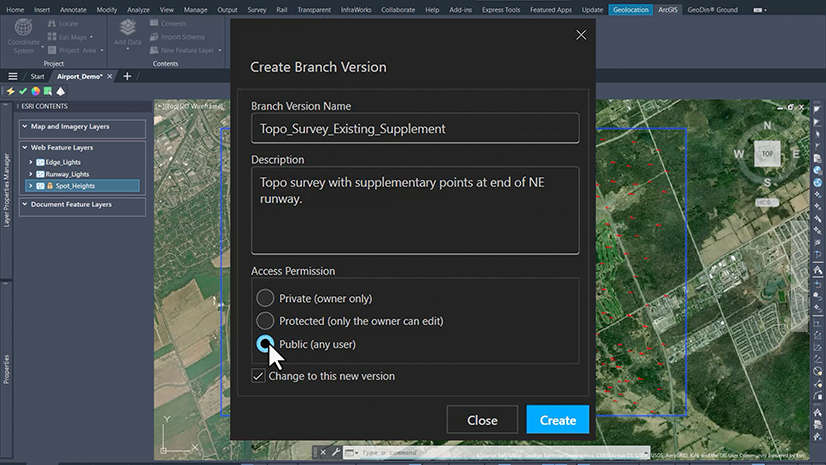
As the project progresses, new survey points have been gathered to fill gaps identified in the initial surface in the northeast corner of the site. One of the surveyors creates a named branch and uploads the latest field data.随着项目的推进,已收集到新的测量点,以填补场地东北角初始地表中发现的空白。一名测量员创建了一个命名分支,并上传了最新的现场数据。
Meanwhile, a civil designer working on a proposed taxiway alignment creates a separate branch to test design options without interfering with the main dataset. Throughout the week, team members synchronize their edits to ArcGIS Enterprise, and the GIS manager can see who made each change and when.与此同时,一名负责拟议滑行道走向的土木设计师创建了一个单独的分支,以在不干扰主数据集的情况下测试设计方案。在整个星期里,团队成员将他们的编辑内容同步到ArcGIS Enterprise,而GIS经理可以查看每项更改的执行者和执行时间。
Updating design data 更新设计数据
Work continues as new data is incorporated, and design options are refined. The short video below shows how supplementary topographic survey data — freshly gathered for the northeast portion of the work site — can be incorporated into a named version using ArcGIS for AutoCAD.随着新数据的纳入和设计方案的完善,相关工作仍在继续。下面的短视频展示了如何使用ArcGIS for AutoCAD,将为工地东北部新收集的补充地形测量数据整合到一个命名版本中。
The engineer adds these new points, rebuilds the surface, and synchronizes the changes from Civil 3D. The result is a richer, more accurate TIN surface that better characterizes the existing ground where the runway extension is proposed.工程师添加了这些新点,重建了曲面,并同步了来自Civil 3D的更改。结果是得到了一个更丰富、更精确的TIN曲面,该曲面能更好地描述拟建跑道延长段处的现有地面情况。
Synchronizing these changes makes them available for review by the lead civil engineer and the GIS team, so that the updated information can be brought into the authoritative dataset when ready. This ensures that all team members — from designers to project managers — are working from the latest, most reliable information.同步这些变更后,首席土木工程师和地理信息系统团队便可对其进行审核,以便在准备就绪时将更新后的信息纳入权威数据集。这能确保所有团队成员——从设计师到项目经理——都使用最新、最可靠的信息开展工作。
Reconciling and posting changes 协调并发布更改
Once the chosen design option is selected, the GIS manager reconciles the preferred branch with the default version from ArcGIS Pro. After a final round of QA/QC, the updated surface is published for stakeholders.一旦选定了设计方案,GIS经理就会将首选分支与来自ArcGIS Pro的默认版本进行协调。经过最后一轮质量保证/质量控制后,更新后的地表信息会发布给各利益相关方。
Outdated layers on named branches are archived or deleted as needed, keeping the project data clean and organized. This process not only reduces risk but also ensures that every contributor’s work is traceable and reversible if needed. 命名分支上的过时图层会根据需要进行归档或删除,以保持项目数据的整洁和有序。这一过程不仅降低了风险,还确保了每位贡献者的工作都可追踪,且在需要时可回溯。

The value for project teams 项目团队的价值
Throughout this workflow, the value of using ArcGIS for AutoCAD with branch versioning is clear:在整个工作流程中,使用带有分支版本控制的ArcGIS for AutoCAD的价值显而易见:
- Civil engineers gather existing conditions and participate in GIS workflows directly from Civil 3D. They make edits from their familiar CAD environment while leveraging authoritative GIS data.土木工程师可以直接从Civil 3D中收集现有条件并参与GIS工作流。他们在熟悉的CAD环境中进行编辑,同时利用权威的GIS数据。
- GIS managers maintain control and data integrity. They work with a full chronology of who edited what and when, for collaboration between multiple project contributors without bottlenecks.地理信息系统(GIS)经理负责维护控制权和数据完整性。他们掌握着完整的时间记录,记录谁在何时编辑了什么内容,以便多个项目贡献者之间能够顺利协作,避免出现瓶颈。
The entire project team benefits from working from a single source of truth — with every change auditable and the authoritative dataset protected. For infrastructure projects with multiple contributors that need to work concurrently, using branch versioning in GIS and CAD collaboration adds confidence that every design decision is made using current, authoritative project data.整个项目团队都能从单一事实来源的工作模式中获益——每一项变更都可审计,权威数据集也得到保护。对于有多个贡献者且需要并行工作的基础设施项目而言,在地理信息系统(GIS)和计算机辅助设计(CAD)协作中使用分支版本控制,能让人们更有信心:每一个设计决策都是基于当前的、权威的项目数据做出的。



没有回复内容